

Same task, two ways
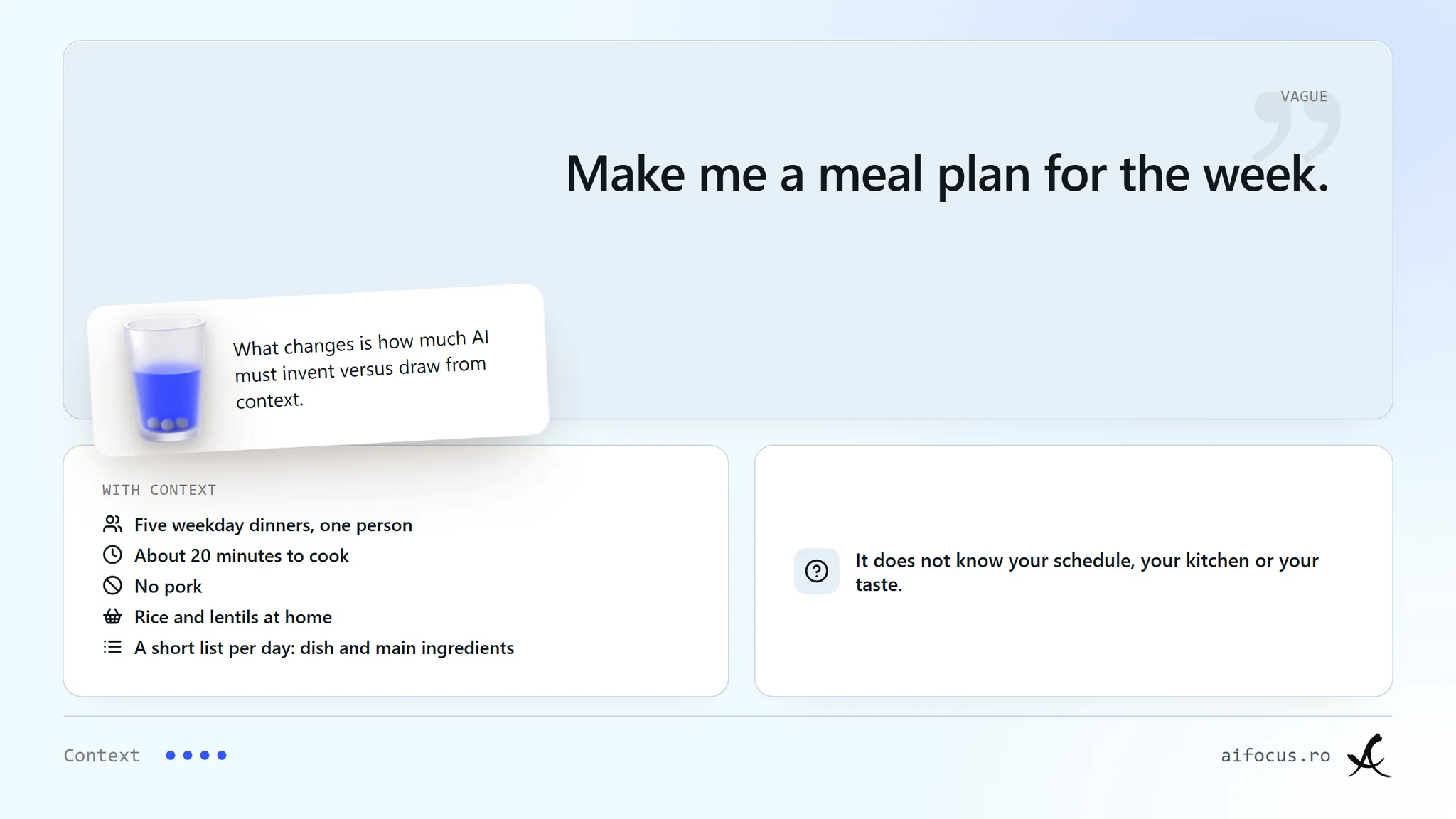
Take one small, familiar task: planning meals for a week. A vague request leaves important choices unspecified.
Prompt
Make me a meal plan for the week.
It may ask questions or offer a generic answer: it does not know your schedule, your kitchen, or your taste. Now give the same task with real, relevant facts.
Prompt
Plan five weekday dinners for one person. I have about 20 minutes
to cook on weekdays. I don't eat pork, and I already have rice
and lentils at home. Give me a short list per day: dish name and
main ingredients.
Why the details matter
The vague version leaves room for assumptions. The informed version replaces guessing with your actual constraints: time, preference, what's already on hand. More detail does not guarantee a perfect answer, and a vague prompt does not guarantee a wrong one. What changes is how much the AI has to invent versus use.
Sort what you give
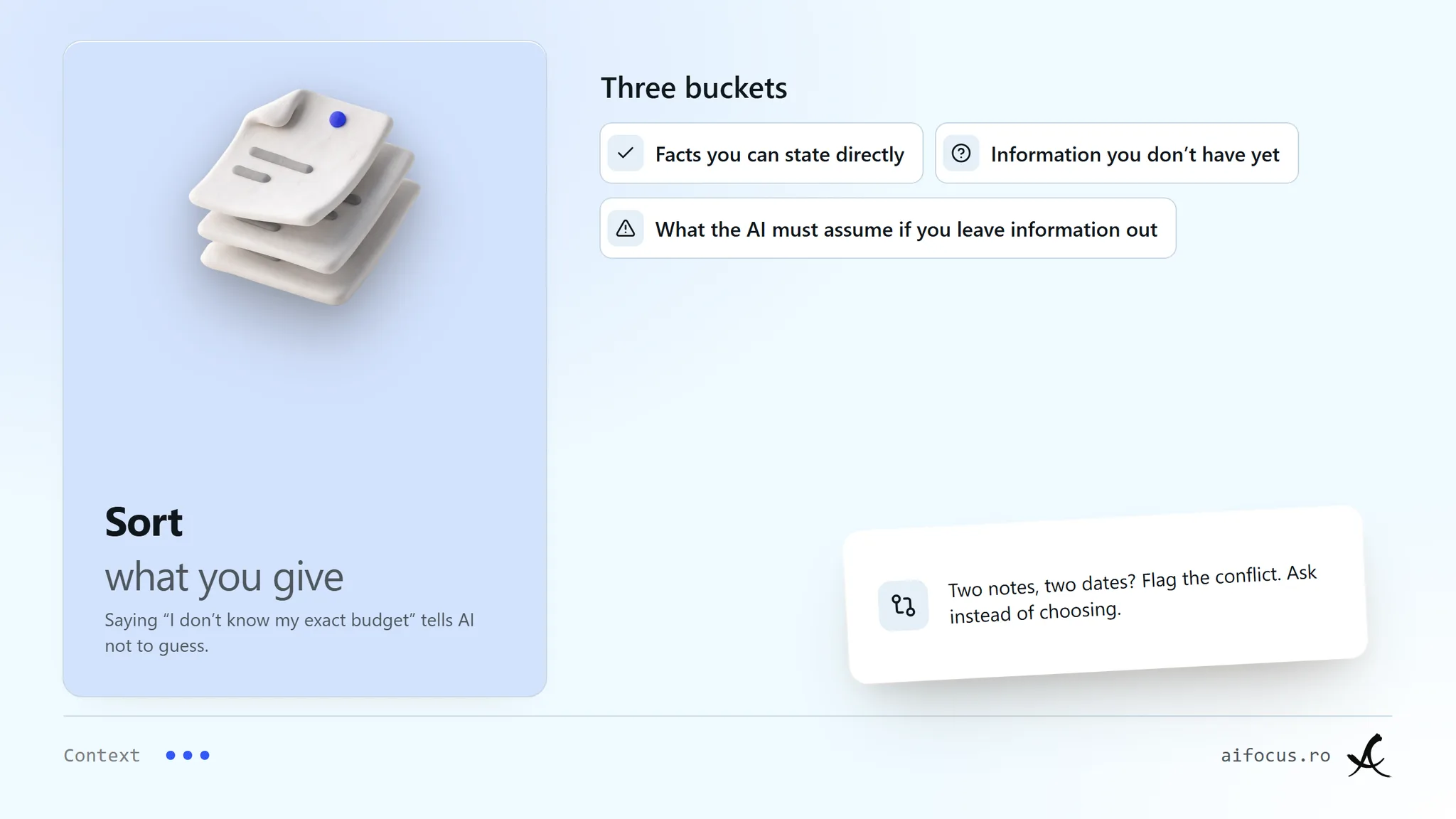
Before you write a request, sort what you know into three buckets: facts you can state directly, information you don't have yet, and anything the AI would have to assume if you leave it out. Saying "I don't know my exact budget" is more useful than silence, because it tells the AI not to guess a number.
Shape, not just facts
Context includes the shape of the answer you want, not only background facts. A template you reuse across tasks can describe that shape without locking in specific numbers or names:
Prompt
Give me: [item 1], [item 2], and a one-line reason for each.
Fill in real facts when you use it. The goal is relevant context, not the longest possible message.
Examples can accidentally become facts
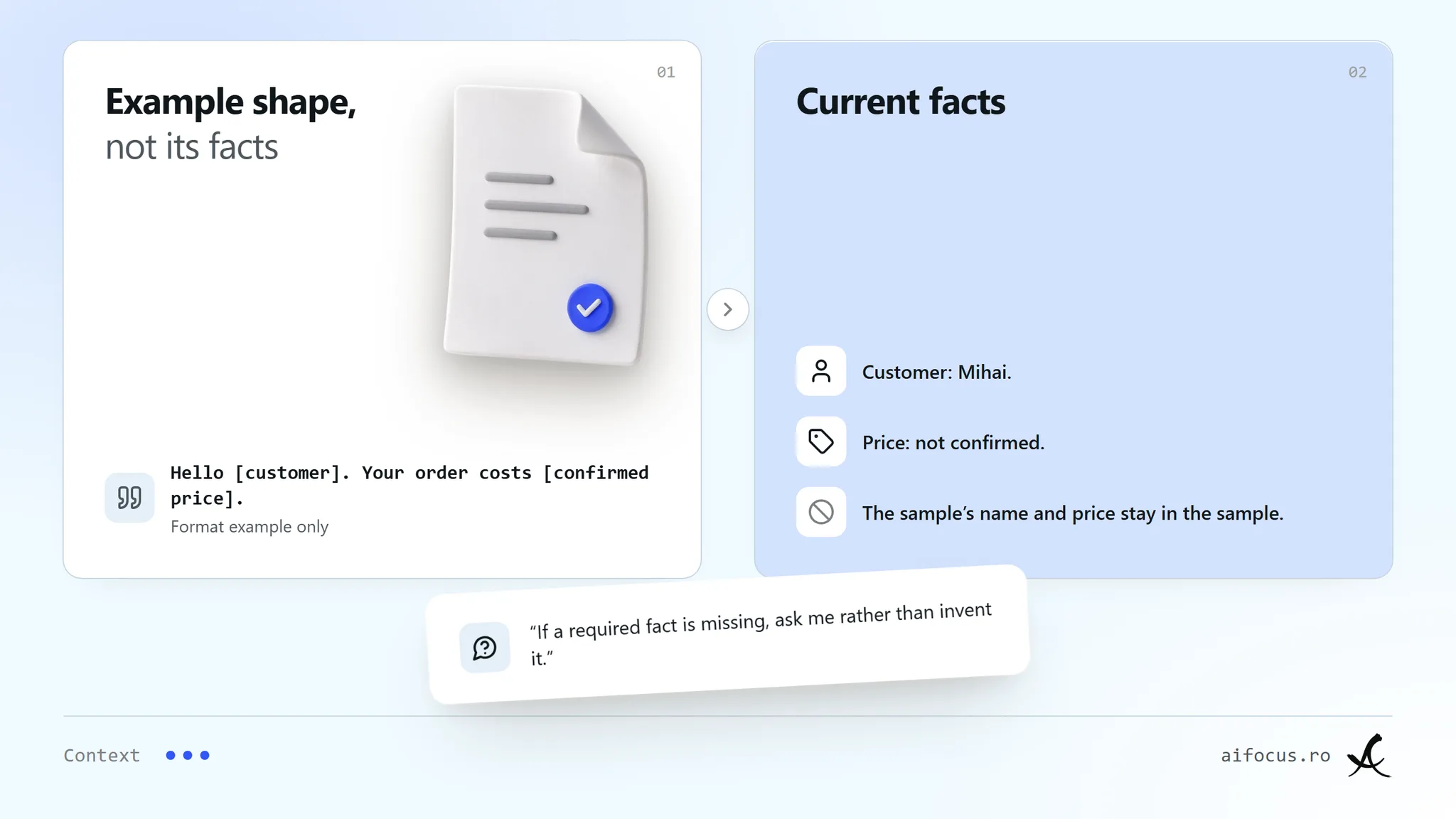
An example can show the format you want while also introducing facts you do not want reused. This is one form of context contamination: information from the example slips into the new answer.
For example, a sample customer message mentions Ana and a price of 200 lei. The new task is about Mihai, and no price is confirmed. Copying the sample's price would add an unsupported fact.
Use placeholders to show the shape, and separate the current facts:
Prompt
Format example only:
Hello [customer]. Your order costs [confirmed price].

Current facts:
Customer: Mihai.
Price: not confirmed.

Use the example's structure, not facts from another example.
If a required fact is missing, ask me rather than invent it.
Here the useful response asks for the price; it does not supply 200 lei. Labels and placeholders reduce confusion, but still check the names, dates and numbers. The same distinction matters when examples are stored inside reusable skills.
When sources disagree or a fact is missing
Sometimes the facts you give AI don't agree with each other, or a needed fact simply isn't there yet. Say two notes about the same order list different delivery dates. With only these two dates, AI has no basis for choosing the current one.
The useful move is to name the conflict and ask a focused question instead of picking a date to keep things moving.
Prompt
Here are two notes about the same delivery: note A says March 12,
note B says March 14. I don't know which is current. Don't choose
one. Tell me what you'd need to confirm the correct date, and list
both notes as a conflict until I resolve it.