

Pause before you ask
A tool with power still needs a target. Before you open a chat, take a short pause and decide what you actually want from this exchange. What is the goal, what do you already know, and what should the result look like when it is done?
This is not a strict rule against thinking aloud. You can still explore an idea in front of the AI. But going in with a rough sense of direction changes what comes back.
State the goal and the facts
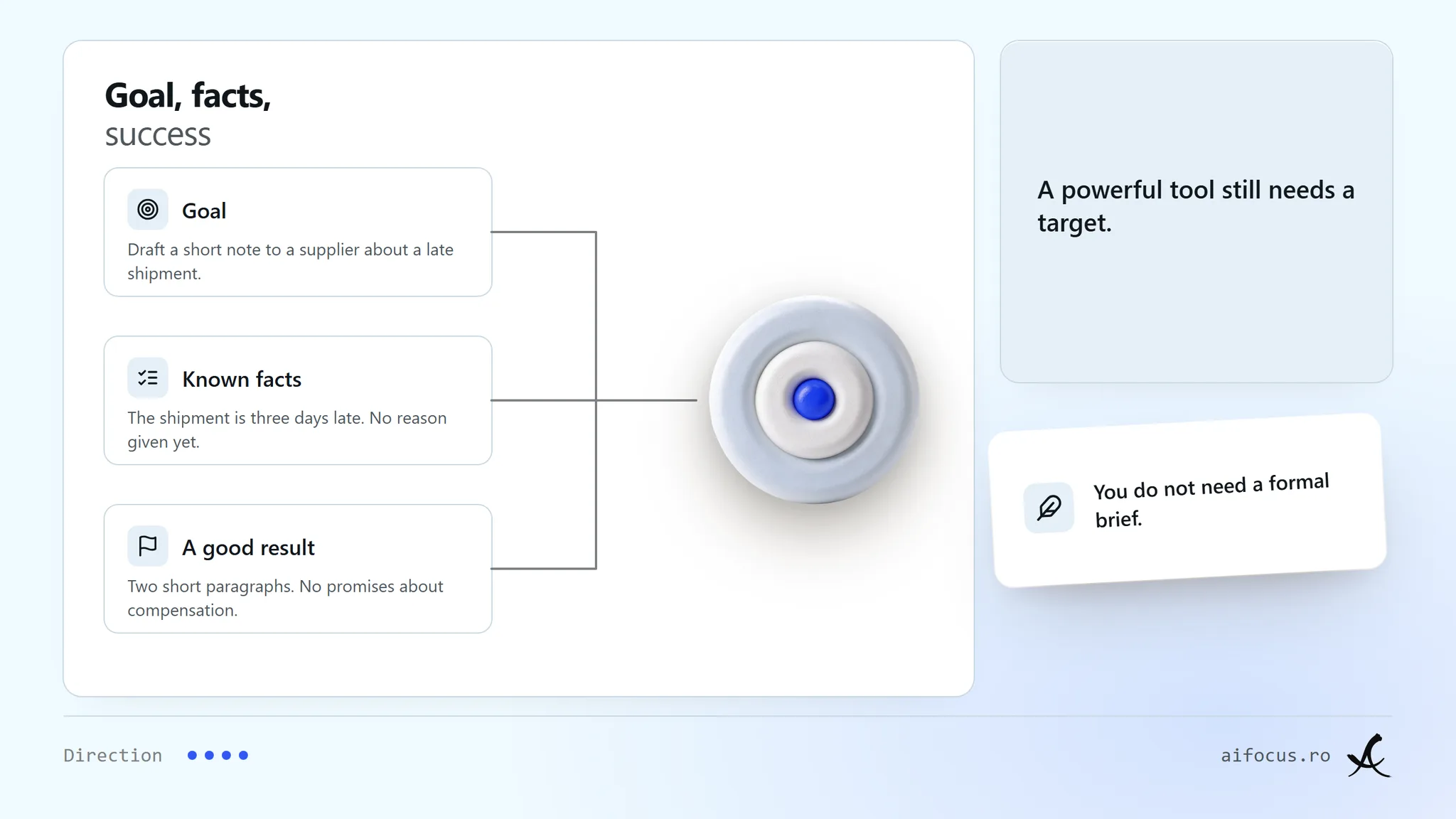
A short pause is enough to gather three things: your goal, the facts you already have, and what a good result looks like. You do not need a formal brief.
Prompt
Goal: draft a short note to a supplier about a late shipment.

Known facts: the shipment is three days late, no reason given yet.

Success looks like: two short paragraphs, no promises about
compensation.
Naming these three things before you type can reduce avoidable rounds of correction.
Let AI advise, not just obey
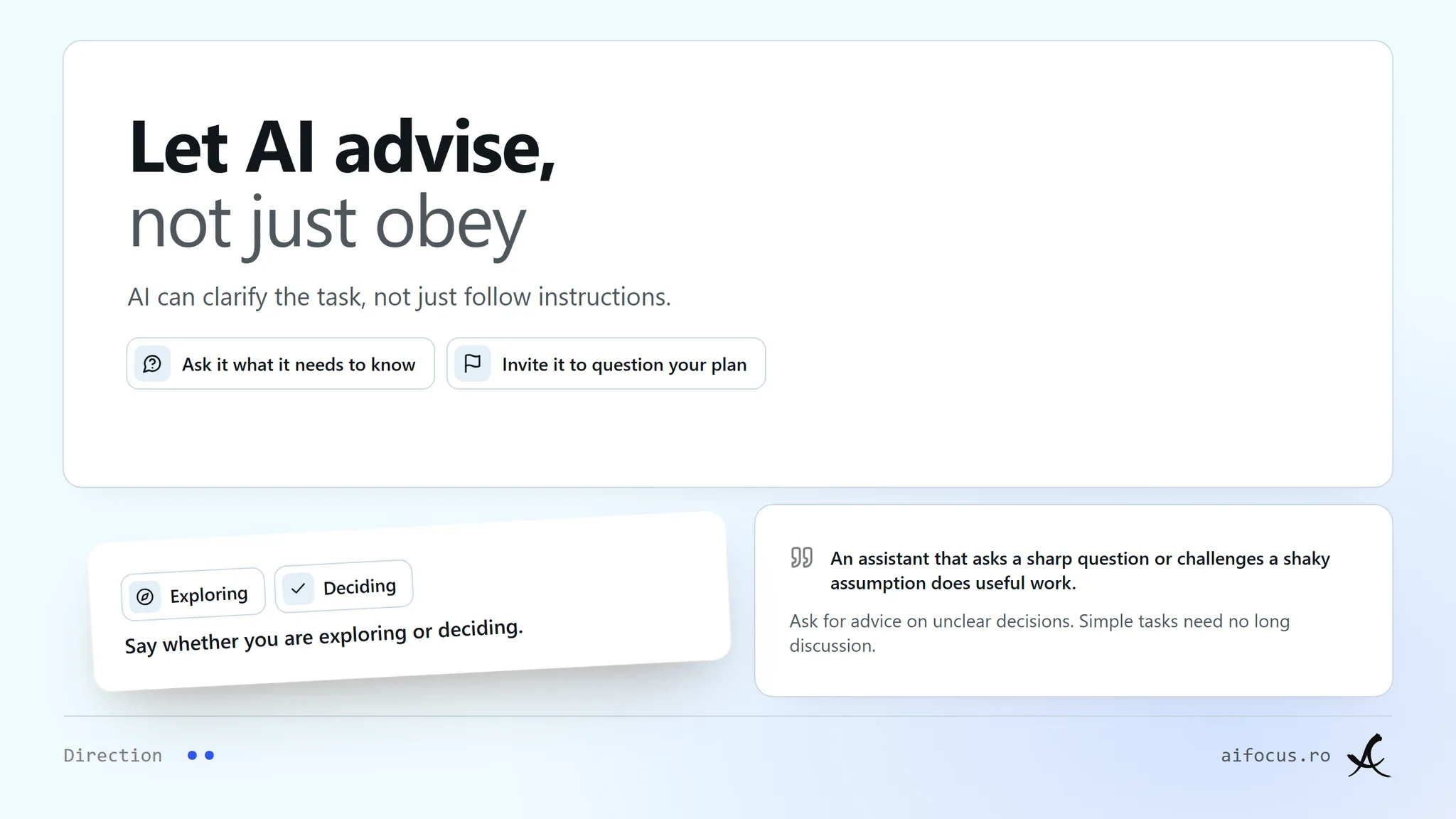
AI can help clarify the task, not only follow instructions: ask it what it needs to know, or invite it to question your plan.
Prompt
Before you write anything, tell me what information you would
need to do this well, and flag anything in my plan that looks
risky or unclear.
An assistant that asks a sharp question or challenges a shaky assumption is doing useful work, not being difficult.
[!tip] Keep in mind Ask for advice when a decision is unclear. A small, clear task need not become a long consultation.
Name exploration and execution
Say out loud, in the chat, whether you are exploring or deciding. "Let's think through options" and "Go ahead and write the final version" are different instructions. Marking which one you mean keeps a rough idea from being executed as if it were a finished decision.